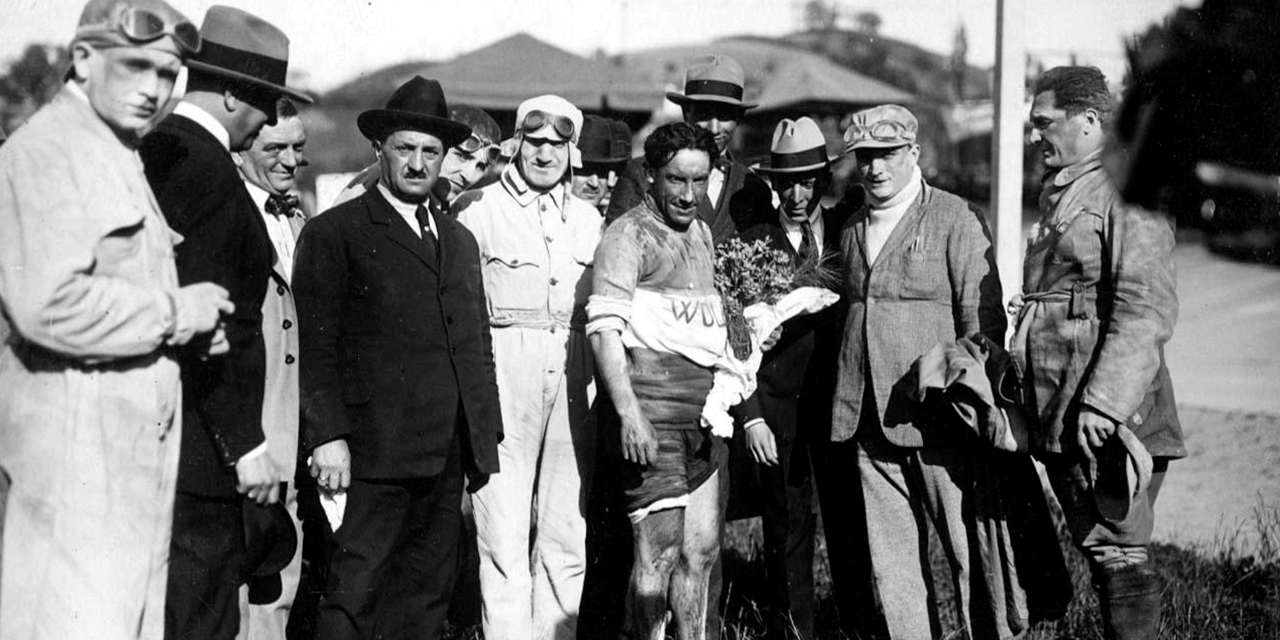
The history of the Giro del Piemonte began in 1906, in the pioneering days of cycling, an era of punishing roads and endless hours in the saddle. The inaugural edition started and finished in Alessandria, after 320 kilometres and more than eleven hours of racing. Giovanni Gerbi emerged victorious and went on to dominate the following two editions as well, forever linking his name with the race. Only Costante Girardengo, Aldo Bini, Gino Bartali and Fiorenzo Magni would go on to match his tally of three victories, a record that remains unbeaten to this day. Those early years also featured some unusual experiments: in 1932, the Giro was transformed into a four-stage race and, just one year later, it was extended to no fewer than six days of racing.
1933: The six-stage Giro del Piemonte
Historically, the Giro del Piemonte has always been – and remains – one of the great one-day classics, but there have been a handful of editions in which the race was held over multiple stages. The record came in 1933, when six stages separated the start and finish in Turin, with the route even venturing into the Aosta Valley. The race opened with the 124 km Turin-Aosta stage, followed by Aosta-Novara (176 km), Novara-Vercelli (167 km), Vercelli-Alessandria (134 km), Alessandria-Cuneo (162 km) and, finally, Cuneo-Turin (151 km).
The stages were won in succession by Giuseppe Graglia, Andrea Minasso, Cesare Facciani, Carlo Castagnoli and Antonio Folco, who claimed the final two stages and went on to secure the overall victory. The race leader wore a blue-and-yellow jersey, reflecting the colours of the city of Turin.
At the time, the race was reserved for independent riders and amateurs, which explains the absence of the biggest names of the era from the results. For his part, Folco’s victory helped earn him a two-year contract with Gino Bartali’s Frejús team, and in 1935 he went on to win a stage of the Giro d’Italia. After that edition, the Giro del Piemonte would never again be held as a stage race, with the sole exception of 1945, when the first post-war edition was contested over two stages and won by Secondo Barisone.
Click HERE to explore the HISTORY page of GranPiemonte