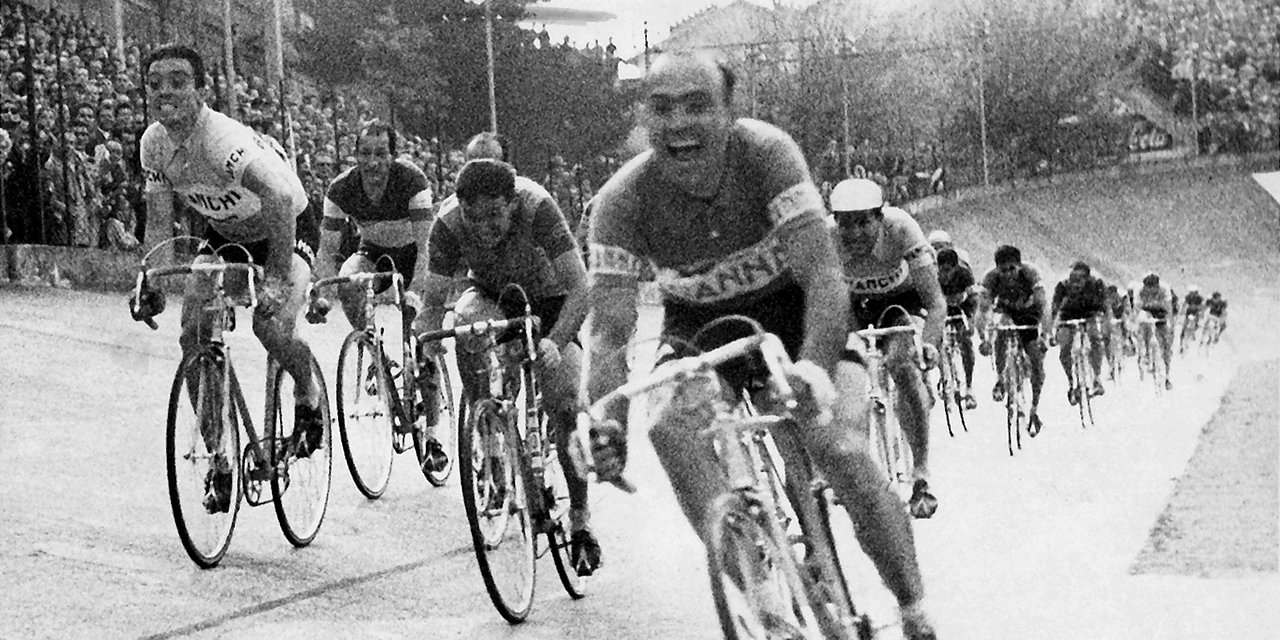
With Fiorenzo Magni, the Giro del Piemonte symbolically spans two eras: the heroic age of the pioneers and the age of champions destined to become icons of cycling. The first of his three victories came in 1942, while the Second World War was ravaging Europe and directly affecting his own life as well. Magni would return to win the Piedmontese classic in 1953 and 1956, completing a remarkable hat-trick fourteen years after his first triumph.
His is just one of the illustrious names to feature on the race’s roll of honour. Alongside him are champions such as Gino Bartali, Felice Gimondi, a two-time winner, Eddy Merckx, Francesco Moser, Giambattista Baronchelli, Gianni Bugno and Claudio Chiappucci. In 1977, Roger De Vlaeminck took victory in the first edition organised by La Gazzetta dello Sport.
Amid so many glorious chapters, however, one remains deeply painful: the 1951 edition, marked by the death of Serse Coppi, Fausto’s brother.
1951: The death of Serse Coppi, a champion never forgotten
Serse Coppi may have been the less famous of the Coppi brothers, but he was a champion in his own right, winning Paris–Roubaix in 1949, even before his brother managed to do so. On 29 June 1951, during the final sprint of the Giro del Piemonte, Serse’s wheel accidentally became caught in a tram track. He crashed and hit his head violently on the ground on Corso Casale in Turin, just a few hundred metres from the finish at the Motovelodromo.
At first, the consequences of the crash did not seem too serious, but after returning to his hotel room, Serse began suffering from extremely severe headaches. Half an hour later, he lost consciousness and the doctor ordered his immediate transfer by ambulance to the Sanatrix clinic. Fausto and sports director Giovanni Tragella accompanied him. Doctors feared a haemorrhage and, sadly, their concerns proved well founded. Surgery to relieve the pressure on his brain was ordered and blood was requested from the Molinette blood bank, but before the operation could take place, Serse died without ever regaining consciousness.
Devastated, Fausto murmured: “Mother was right: we should never have raced. I won’t go to the Tour de France.” A couple of days later, however, he was persuaded to take part in the Grande Boucle. He arrived in disastrous physical and emotional condition, and it would prove to be the only one of the three Tours he contested that he did not win.
Serse Coppi is buried alongside his brother Fausto in their home village of Castellania.
Click HERE to explore the HISTORY page of GranPiemonte